Would you like to discover Florence on a 3-day tour with a local guide? We’ll prepare the best tour to get to know Florence in depth.
Florence is one of the favourite destinations for millions of tourists every year — and the figures from official Florence tourism confirm it: this incredible Italian city is booming. Deciding what to see in Florence in 3 days should not be a problem but rather a stroke of luck, since few cities in the world offer the traveller such an endless range of things to visit as Florence does. Museums, churches, squares, narrow streets and countless corners that whisper wonderful legends and stories of great artists and great families — revenge, secrets, romance and dreams come true. The traces of all this can be felt throughout the city.
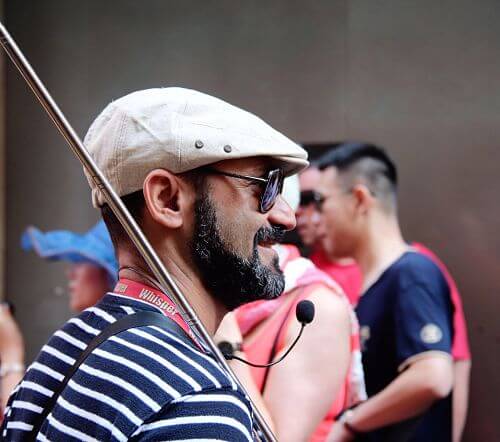
There is no one better than an expert on the city, a local guide, to explore and discover all the Florences hidden beneath the one that meets the eye. I invite you to visit Florence in three days with me.
Itinerary for visiting Florence in two or three days
Day 1 in Florence: a walk through the city centre
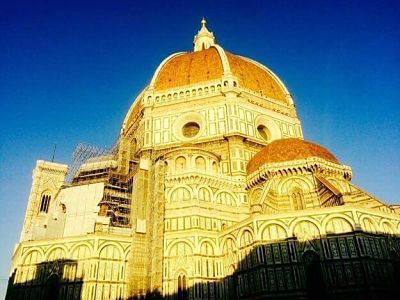
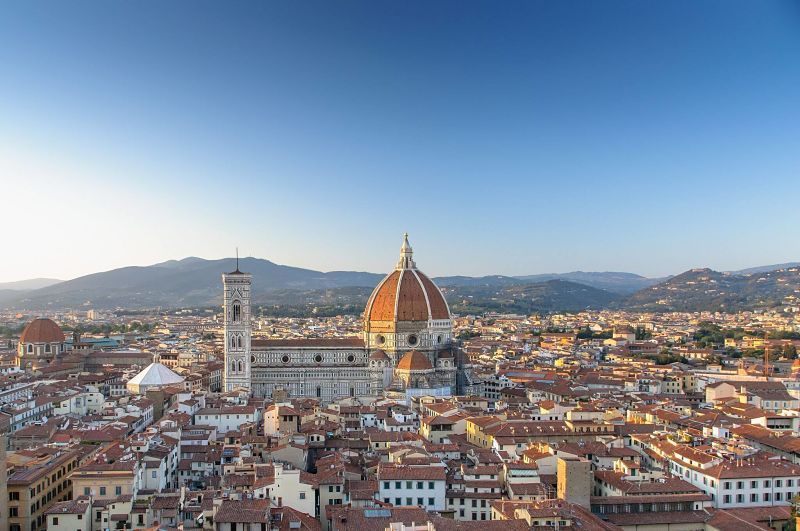
It is almost essential to start at the religious heart of the city, Piazza del Duomo, Florence Cathedral, one of the largest temples in Christendom, surrounded by a marvellous, monumental ensemble: the Baptistery, the Bell Tower and, of course, the world-famous Brunelleschi’s Dome.
We will stroll to Piazza della Repubblica, the geographical centre of the city, full of elegant historic cafés. And why not stop for a cappuccino, for example at Gilli, renowned as one of the oldest and most elegant cafés in Italy, founded in 1733. Passing through the triumphal arch, known to Florentines as the Arcone, we enter the noble quarter of the city. Magnificent palaces of immensely wealthy Renaissance families, such as the Strozzi, and one of the country’s best-known streets, Via Tornabuoni.
We will step into Piazza di Santa Maria Novella and discover its marvellous basilica — a true museum in itself, where artists such as Giotto and Ghirlandaio, Michelangelo’s master, left their mark.
Day 2 in Florence: visiting the Florentine museums
On the second day of this 3-day Florence tour, we will visit some of the city’s most important museums — in Florence they are countless and truly remarkable. We will begin with an open-air museum, which is also the political centre of the city: Piazza della Signoria, where the tallest tower in the city rises imposingly to almost 95 metres — the tower of the government palace and seat of power for centuries, Palazzo Vecchio. Masterpieces of universal art such as the Rape of the Sabine Women and Perseus, among many others, are on full display in one of the most beautiful squares in Europe.
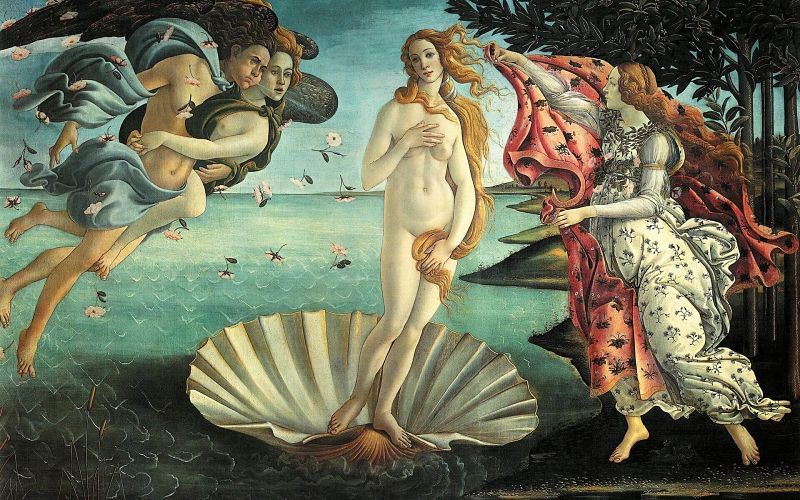
One of Florence’s great attractions, and one of the most admired and visited, stands right next door: the Uffizi Gallery, one of the most important painting museums in the world. Works by artists of the calibre of Botticelli, Michelangelo, Raphael, Leonardo da Vinci, Titian and Caravaggio, among others, await us inside.
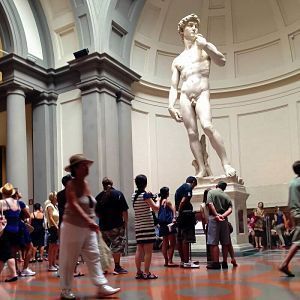
After visiting the museum, it is well worth wandering through the medieval quarter, immersing ourselves in Dante’s Florence on our way to the Accademia Gallery, home to one of the city’s most important works and the pride of all Florentines: Michelangelo’s David. A golden finale to a day like this.
Day 3 in Florence: a Florence of contrasts
And now it is time to discover a Florence of contrasts — of great basilicas and small chapels, of narrow streets lined with artisan workshops and of grand palaces. An essential stop is Piazza di Santa Croce, the popular heart of the city, which takes its name from the magnificent Franciscan church turned pantheon of Italy’s glories. Here rest the remains of Michelangelo, Galileo and Machiavelli, among others.
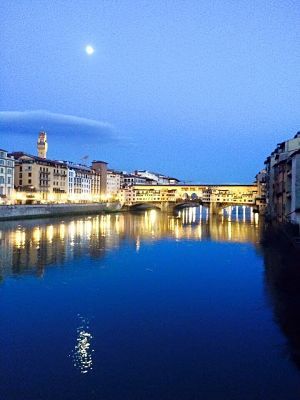
We will head towards the river, the Arno, an undisputed protagonist in the city’s history, spanned by the oldest bridge in the city, the Ponte Vecchio (‘Old Bridge’), lined with jewellery shops and one of the city’s most iconic sights. Crossing the bridge means stepping into the most authentic, traditional Florence — narrow streets and artisan workshops, full of stories and anecdotes.
The walk reaches its high point on arriving at Palazzo Pitti, the largest palace in the city and residence of the Medici family, called by many the Florentine Versailles. Visiting the palace means discovering an essential part of the city’s history, and exploring the palace gardens, the Boboli Gardens, means discovering a true oasis within the city.
And does it all end here? The answer is most definitely NO. Florence could keep us exploring and discovering for another three days without ceasing to surprise us for a single moment. But that is another story, and it deserves to be told another time.